This article was originally published by Mayors of Europe and is republished here with permission. Written by Sila Egridere, Architect and Smart City Expert.
In recent years, urban planning has undergone a significant evolution from a car-centric approach to a more human-centered perspective. This transformation not only enhances the quality of life in cities but also holds the potential to create more sustainable, livable, and eco-friendly spaces for future generations.

Consider the fact that a car requires approximately 12 square meters of space just for parking. Even if we assume that there are no parking spaces on a street with a 2-lane road, even if the minimum street length is 50 meters, we see that about 300 square meters are allocated to cars (Figure 1). However, this space could be repurposed in numerous ways to benefit people. It could be transformed into pedestrian walkways, bicycle lanes, green spaces, or public areas, and with community participation, these spaces could host various activities such as physical exercise, sports, recreation, cultural and artistic events, social gatherings, or even gardening and nature activities.
For such collaboration to thrive, accessible and comfortable public transportation is a precondition. It’s essential to understand that the transformation of cities is a multifaceted process involving many pillars working together. The design and transformation of our living spaces, especially in terms of mobility, landscape, and society, play a crucial role – both in knowledge transfer and through integrated urban projects.

Figure 1: DALL·E, AI-generated image, created using a text-based prompt by Author, Sila Egridere, October 2024.
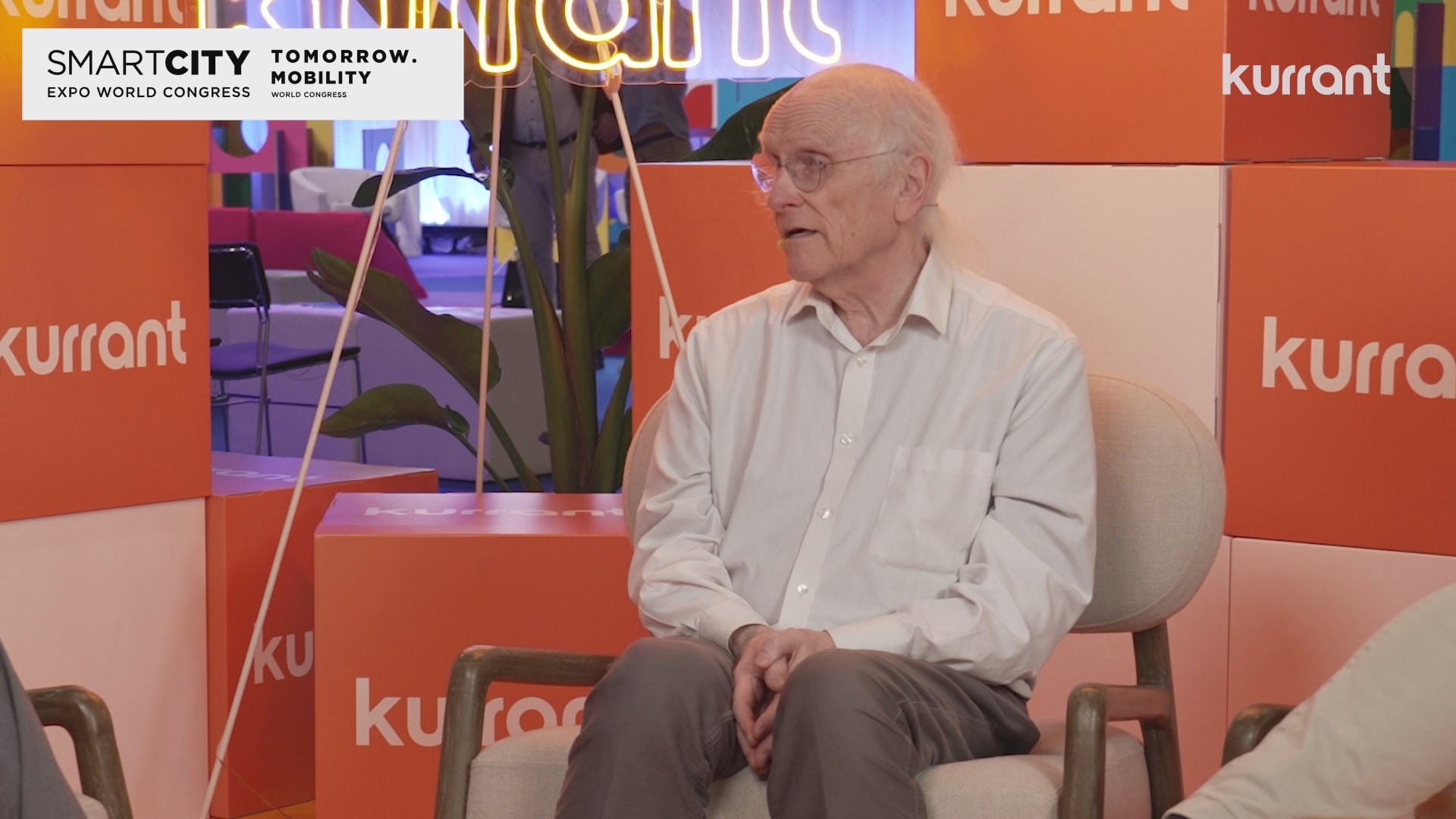
Recently, I had the opportunity to interview Andreas Rupf, the Head of ETH Zurich’s Platform for Urban and Spatial Development Research (ETH RAUM). Andreas explained that ETH RAUM focuses on urban planning and design, with a particular emphasis on making urban spaces more human-centered and sustainable.
The main theme of our conversation revolved around the question, “How is Urban Planning Shaping a Human Centered Future?” Andreas pointed out that Zürich is making substantial efforts to integrate these people-oriented spaces into Zürich’s urban fabric. He noted that while Zürich already boasts a significant amount of greenery, there is still a need for more accessible public parks and social areas to encourage interaction among residents. Highlighting Singapore as an exemplary model, he suggested that European cities could take inspiration from its approach to integrating green spaces seamlessly into urban design.
‘Not In My Backyard’
Andreas addressed the challenges that cities face when densifying and transitioning from car-centric to human-centric planning. He explained that despite the conceptual acceptance of human-centered spaces, there is often resistance from residents –a phenomenon known as the ‘NIMBY‘ (Not In My Backyard) effect. According to him, even when new urban projects like superblocks or traffic-free zones are introduced, the public’s reluctance to accept changes in their own neighborhoods remains a significant hurdle. This reflects a broader challenge in changing not just the physical layout of cities but also the underlying attitudes of the people who live in them.
Cohesive Mobility Strategy
Public transportation, is a key driver in supporting the shift towards more pedestrian-friendly and green urban areas. Andreas mentioned Zürich’s efficient public transport system as a model that enables reduced car dependency, which in turn frees up space for human-centered activities. Drawing a comparison with the Netherlands, where cycling infrastructure is prioritized, he highlighted that a cohesive mobility strategy could make alternative transport modes like cycling more attractive and practical for everyday use.

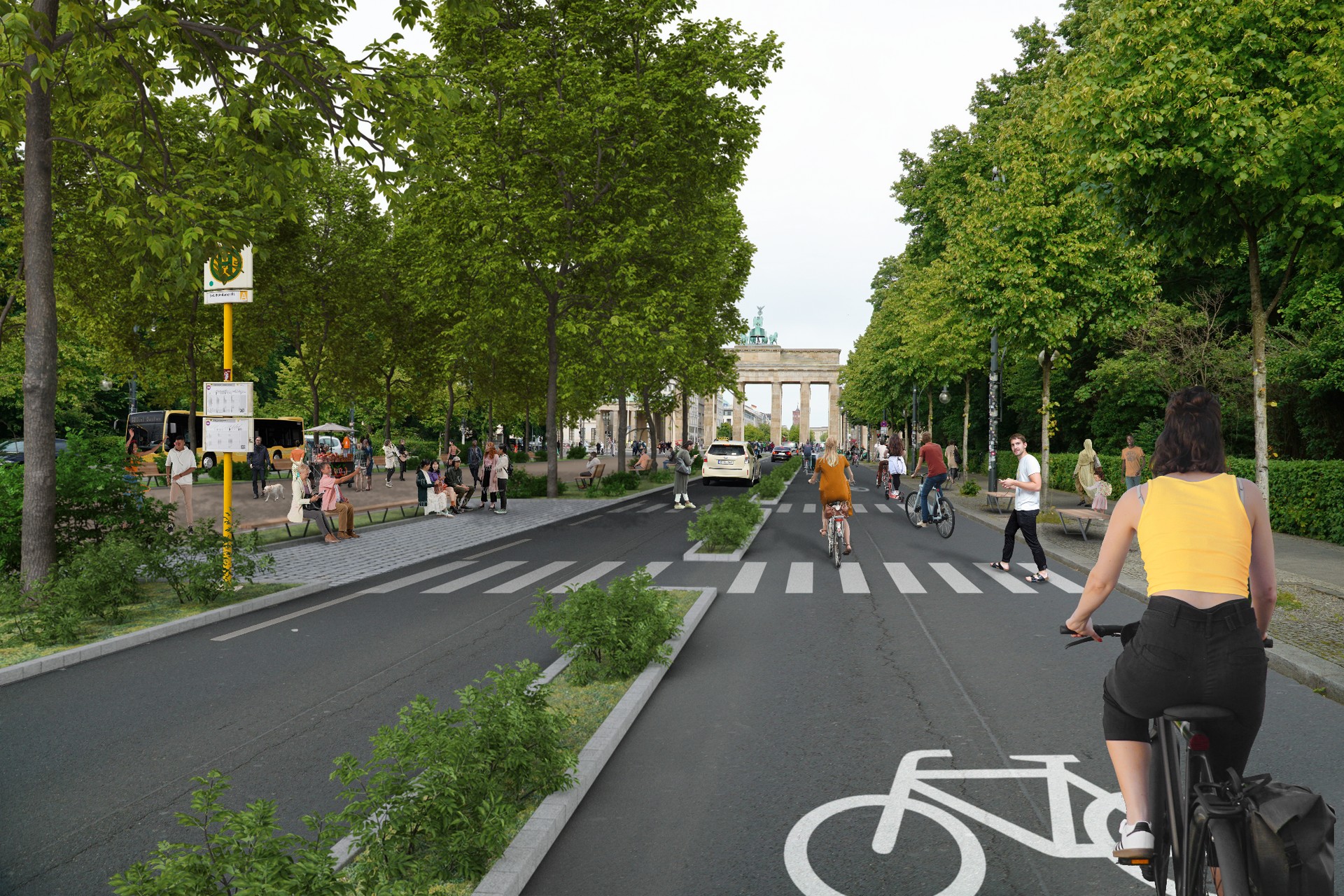
Figure 2: Visualization of Dutch cycling infrastructure applied to an urban street, generated using the Dutch Cycling Lifestyle tool (dutchcyclinglifestyle.com).
Technology’s Role
Regarding technology’s role in urban transformation, Andreas emphasized the significance of data driven tools in advancing human-centric urban planning. Platforms like the Future Cities Laboratory streamline the planning and decision-making processes, using data to inform cities about mobility patterns, public space usage, and community needs, leading to more targeted and efficient urban development strategies.
Another great example of data-driven urban planning is the E-Bike City (EBC) research project at ETH Zurich. The project offers a flexible street re-design algorithm that allows urban planners to incorporate real-world factors such as reallocating parking spaces and positioning bike lanes near green areas. In addition to Andreas’s insights, I want to highlight some innovative tools emerging that help cities rethink their streets.
For example, with the help of artificial intelligence (AI), Google Street View, and the expertise of cycling experts, a platform has been developed that allows people worldwide to visualize how they can introduce Dutch-style cycling infrastructure into their own environments. This tool, gives users the chance to play with various urban designs, adding a touch of the Dutch cycling landscape to their streets (Figure 2).
Similarly, the 12m2 project by Katja Diehl, Jan Kamensky, and Ana Amil allows users to see how much more could fit in a standard 12m2 parking space. It’s a playful yet eye-opening way to rethink the value of urban space currently devoted to car parking (Figure 3).

Figure 3: Visualization showing various uses of a 12m² parking space, generated using the 12m² project tool by Katja Diehl, Jan Kamensky, and Ana Amil. Available at 12m2.org.
Participation
Citizen participation emerged as another crucial factor in transformation. He underscored the need to engage the public in the planning process, suggesting initiatives like low-threshold offers and community centers as ways to involve people more actively. He pointed to London’s bottom-up approach, which fosters community engagement by building networks that bring residents together to contribute to the decision-making process.
Various Stakeholders
When asked about balancing the needs of various stakeholders in urban planning, Andreas acknowledged the difficulty in aligning the interests of all parties involved. He explained that while the public sector sets the standards for urban design, convincing political bodies and the broader public to prioritize human-centric approaches over traditional car-centric planning requires persistent effort and collaboration.
‘Gentrification’
Finally, the issue of gentrification was a significant concern in our discussion. Andreas noted that as cities become more human-centered and attractive for urban living, the challenge of maintaining accessibility and affordability in these areas grows. He highlighted Zurich’s cooperative housing model, which aims to keep housing affordable and accessible by focusing on community needs rather than profit. Citing Vienna’s social housing as another successful example, he emphasized the importance of proactive policies to ensure that human-centered developments do not exclude lower income residents.
This transformation is not just about changing physical structures; it’s also about creating a fundamental shift in societal consciousness. So, are streets changing society, or is society driving the change in streets? It seems to be a mutually reinforcing cycle, where each influences and shapes the other.
The insights from my conversation with Andreas Rupf highlight that both cities and their inhabitants play pivotal roles in this evolution, collectively paving the way for a more inclusive, sustainable, and human-centered urban future.
References:
Future Cities Laboratory. (2024). Simulation Platform for Urban Planning and Sustainability. ETH
Zurich. Retrieved from https://fcl.ethz.ch.
Dutch Cycling Lifestyle. (2024). Platform to Visualize Dutch-Style Cycling Infrastructure.
Retrieved from: https://dutchcyclinglifestyle.com
ETH Zurich. (2024). E-Bike City: Fair Mobility Emphasises Micromobility and Public Transport.
Department of Civil, Environmental, and Geomatic Engineering (D-BAUG), ETH Zurich.
Retrieved from https://baug.ethz.ch/en/news-and-events/news/2024/09/e-bike-city-fair-mobilityemphasises-
micromobility-and-public-transport.html
ETH Zurich. (2024). ETH RAUM: Center for Urban and Spatial Development Research. Retrieved
from https://www.raum.ethz.ch
Diehl, K., Kamensky, J., & Amil, A. (2024). 12m2 Project: Exploring Alternatives for Urban Space
Usage. Retrieved from: https://12m2.org