Author | Lucía Burbano
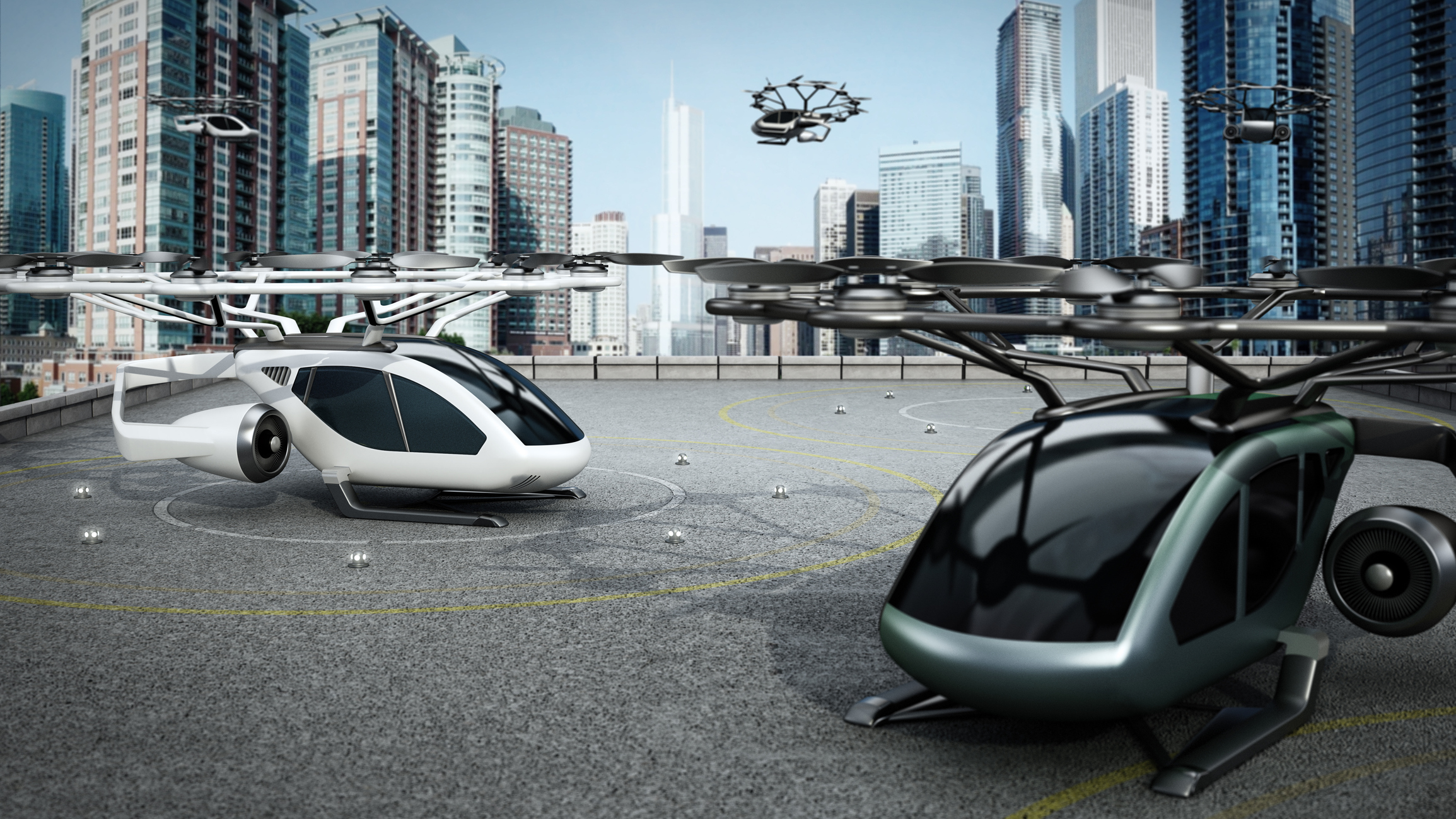
Dubai is no stranger to breaking records, especially in architecture and urban planning. Now, the city is once again making global headlines with the announcement that, as early as this year, VTOL (Vertical Take-Off and Landing) vehicles will take to its skies.
These flying vehicles are at the core of the local government’s mobility strategy, which aims to establish a modern and sustainable transportation system. The General Civil Aviation Authority (GCAA) is currently reviewing applications from two flying taxi companies, Archer and Joby, with plans to commence operations between 2025 and 2026.
However, due to its innovative and pioneering nature, flying vehicle technology presents a challenge for manufacturers, regulators, and operators striving to approve and introduce this new mode of urban transportation.
The deployment of flying cars in Dubai

Numerous companies have already entered the local market, benefiting from Dubai’s favorable environment for vehicle certification and the development of essential infrastructure.
Starting with Archer, which has announced its involvement in a multi-party agreement to launch electric air taxi operations in the Emirate. Beyond Dubai, this agreement positions the company as the first in Abu Dhabi to establish manufacturing and flight testing capabilities.
In Joby’s case, the company has announced the construction of its first vertiport in preparation for the imminent deployment of its vehicles. Located at Dubai International Airport, this infrastructure will be one of the four initial locations forming the company’s airport network. The goal is to establish an air taxi service that the company aims to launch by the end of 2025. The three additional planned vertiports will be located in Palm Jumeirah, Downtown Dubai, and Dubai Marina.
Another company, PAL-V, has sold 100 of its Liberty flying vehicles to Aviterra, a Dubai-based company specializing in the manufacturing of aeronautical and aerospace components.
The Liberty two-seater is the world’s first flying car capable of transforming into a road vehicle. It boasts a range of 1,315 km on the road and 500 km in the air.
Lastly, Dubai-based private aviation operator Air Chateau, has ordered 10 electric flying cars (eVTOL) from European mobility solutions provider Crisalion Mobility with plans to operate them as air taxis in the Emirates by 2030.
Currently in the development phase, this vehicle has a capacity for five passengers and operates under the supervision of a pilot, overseeing both urban and interurban transportation maneuvers for passengers and cargo.
Advanced regulations for VTOL
Recently, Dubai’s General Civil Aviation Authority announced new measures to address one of the main challenges faced by VTOLs: regulatory compliance. Specifically, it introduced a “Golden Package” for the private aviation sector, which, among other benefits, allows aircraft owners to manage and operate their vehicles independently, without relying on a third-party operator.
Aqeel Al Zarouni, Assistant Director General of Aviation Safety Affairs at the GCAA, explained that the Emirate has been at the forefront of eVTOL development for several years, driven in part by regulations governing flying cars and the certification of vertiports. He also stated that further updates are expected in the first half of 2025, when the regulations will be rebranded from Unmanned Aircraft to Advanced Air Mobility.
Given that challenges for these vehicles include safety, costs, and charging infrastructure, it is essential for Dubai—or any other country pursuing this form of air mobility—to establish a solid legal framework that enables the large-scale deployment of flying cars.
Initially, these flying cars are expected to be deployed primarily in the private and government sectors. To operate them, future users will undergo comprehensive training and must obtain a private pilot license.
As early as 2025 or 2026, Dubai’s skies could be filled with futuristic vehicles, setting a global precedent for urban air mobility.
Other countries and regions that have expressed their intention to regulate or certify these vehicles include the United Kingdom, the European Union or the United States.
Advantages of VTOLs

Dubai’s commitment to flying cars is driven by the significant advantages they offer for urban mobility. In particular the following:
Greater efficiency in urban mobility
VTOLs can enhance transportation in congested urban environments by alleviating ground traffic and eliminating the need for large-scale landing strips.
Lower environmental impact
These eVTOL aircraft are powered by electric batteries, enabling them to reduce greenhouse gas emissions and contribute to improved air quality in cities.
Reduced acoustic footprint
Compared to traditional aircraft, these flying vehicles operate more quietly, helping to reduce noise pollution in urban areas.
Accessibility and connectivity
VTOLs could enhance air connectivity and accessibility, particularly in urban and suburban areas, without relying on extensive ground-based infrastructure.