This is a guest post by EIT Urban Mobility. EIT Urban Mobility is the leading innovation community for urban mobility in Europe, committed to accelerating the transition to sustainable urban mobility and more liveable urban spaces.

The concept of universal access refers to the design and operation of built environments, products, services and systems that can be used by all people, regardless of their abilities, age or other factors. The ultimate goal of universal access is to create inclusive spaces and experiences accessible to everyone, without necessitating additional adaptations or specialisations.
Universal design principles
The concept of ‘universal design’ was developed and coined by American architect and advocate Ronald Mace, particularly considering building design and wheelchair accessibility. Mace’s seven principles of universal design, outlined by the Centre for Excellence in Universal Design paved the way for places and spaces to be physically accessible across need and ability.
- Equitable use: the design is useful and marketable to people with diverse abilities
- Flexibility in use: the design accommodates a wide range of individual preferences and abilities
- Simple and intuitive use: use of the design is easy to understand, regardless of the user’s experience, knowledge, language skills or current concentration level
- Perceptible information: the design communicates necessary information effectively to the user, regardless of ambient conditions or the user’s sensory abilities.
- Tolerance for error: the design minimises hazards and the adverse consequences of accidental or unintended actions
- Low physical effort: the design can be used efficiently and comfortably and with a minimum of fatigue
- Size and space for approach and use: appropriate size and space is provided for approach, reach, manipulation and use regardless of user’s body size, posture or mobility
Designing for social impact
Although the principles of universal access were developed and refined in the United States during the 1960s and 1970s, they have since become a valuable foundation for global advancements. These principles continue to evolve, contributing to a more inclusive and accessible built environment for people with diverse physical needs. Progress is made in physical accessibility, the next frontier is social access, particularly in universally shared spaces like public transportation.
Accessibility for people with visual impairments
Building upon the existing principles of universal design – cities and public transportation authorities are tasked with ensuring that public transport is accessible to all. The high degree of accessibility required for public transportation necessitates not only design interventions for physical accessibility, but also innovative policy and planning interventions to create access for groups that might otherwise face barriers.
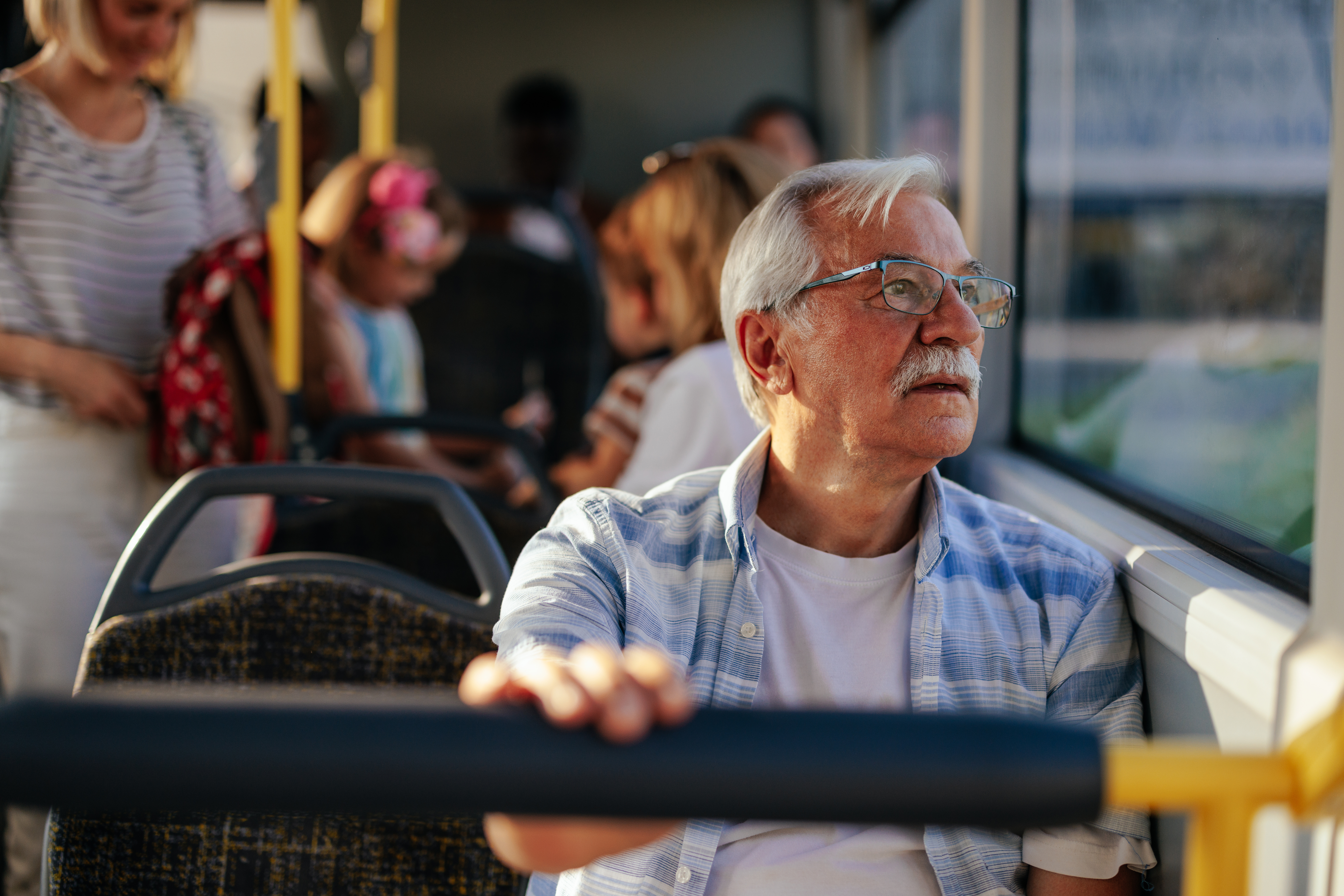
For persons with visual impairments – design interventions like tactile paving and audible announcements are integral to a safe experience. Additionally, startups like Dreamwaves are creating digital applications to increase accessibility for public transit users with visual impairments. Their waveOut app provides users with audio cues, helping them navigate complex stations that would otherwise be inaccessible.
This greater accessibility can be transformative, as the unemployment rate for blind and visually impaired people of working age in Europe is over 75%. Hugo Furtado, CEO and Founder of Dreamwaves explains, “Lack of mobility means the large majority of [blind] people just stay home, they only leave home with someone, so they can feel really isolated and this has bad consequences on your mental health. Mobility can be essential to get a job. If you feel that every day is hard, if you even give up sometimes trying to get to the doctor, which is something essential, then it’s very hard to get a job.”
Affordability = accessibility
Though not necessarily a physical barrier to access, the price of public transport fares can be a significant barrier to accessible transportation use, particularly for low-income individuals and families. High fares can make regular use of public transit services prohibitively expensive, forcing people to limit their travel, stay home or use alternative modes of transport.
This creates a cyclical problem – as those who rely on public transport for access to essential services such as healthcare, education or employment may struggle to access these services due to cost – and their opportunities for economic mobility are therefore limited. Additionally, the lack of affordable transportation options can lead to social isolation, as individuals may be unable to visit family and friends or participate in community activities.
While not a physical design intervention like step-free access to buses or braille signage for wayfinding, designing an inclusive public transport fare system is equally significant for enhancing accessibility. There are many solutions that already consider the various needs of public transport users when it comes to cost. From public or private subsidies that enable sliding scales, or flexible pricing for eligible users, to completely free public transport systems – cities and public transport authorities must consider cost when assessing the accessibility of their offerings.
Interested in learning more?
Join us at Tomorrow.Mobility World Congress to attend several sessions on public transport and accessibility. Buy your ticket now!
Discover former New York City mayor Janette Sadik-Khan’s perspective on public transport as access to mobility and freedom, in her interview from Smart City Expo World Congress 2019.
Header Image: Fons Heijnsbroek