



Table of Contents
This is a guest post by EIT Urban Mobility written by Victoria Campbell. EIT Urban Mobility is the leading innovation community for urban mobility in Europe, committed to accelerating the transition to sustainable mobility and more liveable urban spaces.
Nearly since their invention, bicycles have served as vehicles of social change and tools of emancipation for women.
From the late nineteenth century onward, the bicycle offered women unprecedented personal mobility, allowing them to move through cities and countrysides without dependence on men or on fixed public transport routes. This new freedom of movement helped to unsettle deeply rooted ideas about where women belonged, what they could do and how they should present themselves in public life. Writers and activists of the time often described the bicycle as a symbol of modernity and equality. American suffragist leader Elizabeth Cady Stanton claimed that “the bicycle will inspire women with more courage, self-respect, self-reliance…” and it quickly became associated with the broader struggles for women’s rights and civic participation.
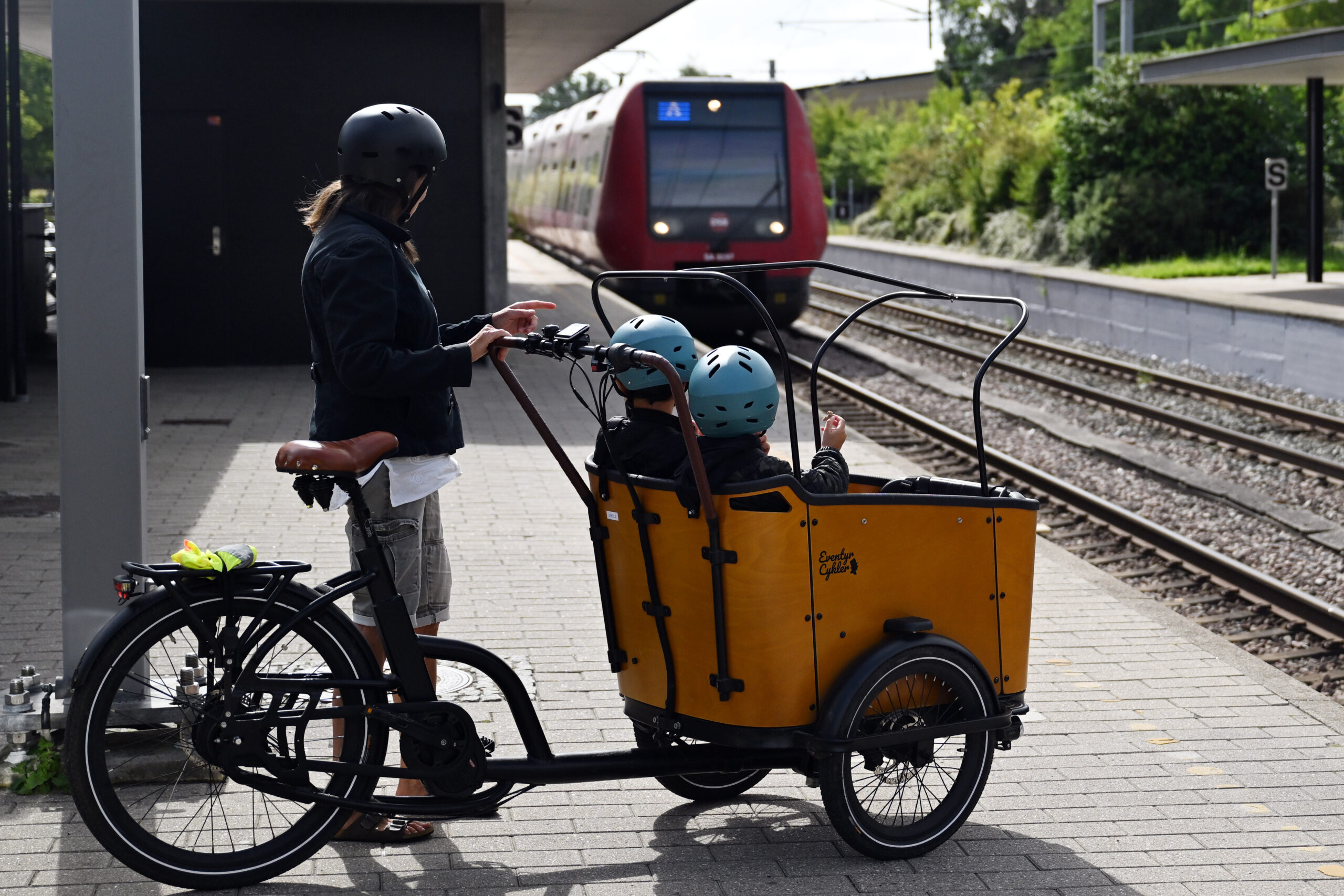
A woman with children sitting on a bicycle wait for a train at a train station in Birkeroed on June 30, 2025. Image copyright: EIT Urban Mobility.
The history of the bicycle and its roots in feminism
In the 1880s and 1890s, the modern ‘safety bicycle’ hit the market. With two wheels of equal size and a lower, more stable frame, this bicycle made cycling more accessible and saer for everyone. As the safety bicycle developed throughout the late 1800s, a drop frame cycle design was introduced with hope of accommodating women’s clothing. Skirts and corsets, which had constrained women’s movement both literally and socially, still offered challenges when cycling, and thus began to give way to more practical, rational dress as riders demanded clothing that allowed them to pedal and balance effectively. This change in clothing was radical in itself, as it visibly defied conventions of Victorian femininity and modesty. The bicycle became a transformative, yet every day tool through which women experimented with new forms of self-presentation and bodily autonomy.
Cycling also expanded women’s access to education, employment and social networks. In many towns, the bicycle made the journey to school, work or political meetings faster and more affordable, particularly in places where public transport was unavailable, sparse or expensive. Women who previously depended on fathers, brothers or husbands to escort them could now travel independently to classes, suffrage gatherings or wage-earning jobs. This autonomy not only broadened their opportunities but also reshaped family dynamics, as women’s time and movements were no longer as easily controlled or monitored.
The bicycle quickly wove itself into the narrative and imagery of early feminist movements. Suffragists in Europe and North America used bicycles to distribute leaflets, travel to rallies and organise across greater distances. Influential suffragette figures such as Susan B. Anthony famously remarked that bicycling “had done more to emancipate women than any one thing in the world“, capturing the spirit of how cycling embodied freedom, health and equality in one human-powered technology.
Over time, the emancipatory role of the bicycle has extended beyond the early suffrage movement and around the world. In many regions today, bicycles remain a key tool in improving women’s access to education, healthcare and markets, especially in rural or low-income communities. For instance, a World Bicycle Relief ‘Wheels of Change’ study in Zambia found that girls participating in its study-to-own bicycle programme experienced a 28% drop in absenteeism, a 66% improvement in punctuality, and a 19% reduction in school drop-out rates. This example and other similar cases help show that when women gain affordable, reliable, and self-directed mobility, their sphere of action expands, and with it their capacity to participate fully in social and economic life.
TandEM: women and cycling
EIT Urban Mobility’s TandEM Women in Cycling programme aims to build upon this rich legacy, adapted to contemporary urban realities. Even today, many women who would like to cycle more often are held back by concerns about safety, lack of experience or a feeling that cycling culture is male-dominated and inaccessible. TandEM responds to these barriers through a mix of training, mentoring and community building that helps women gain the confidence, skills and support they need to cycle regularly in their cities.
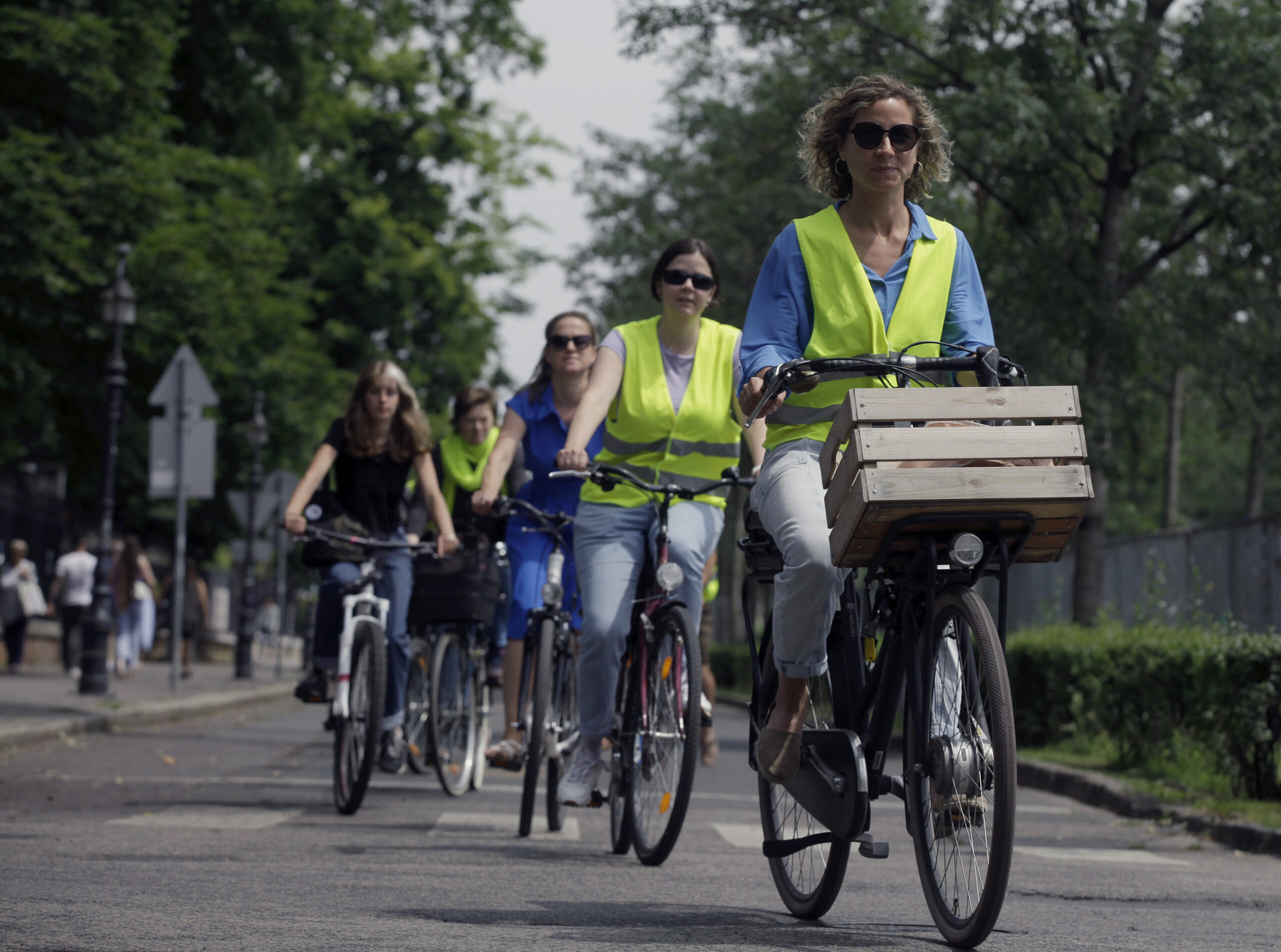
A core element of TandEM is its emphasis on confidence-building and peer support rather than only on technical instruction. More experienced woman riders act as mentors and role models in this train-the-trainer scenario, introducing participants to cycling in a supportive environment where they can practice handling, signaling and route selection at their own pace. The programme’s activities range from beginner-friendly rides to workshops on bike maintenance, designed to empower participants with the knowledge they need to take ownership over their bike and journeys.
TandEM also aims to make cycling cultures and infrastructures more inclusive overall. By bringing more women into the conversation —whether as everyday riders, community champions or voices in local mobility planning— the programme helps shift the perception of who cycling is for. As more women ride, they become visible in the streets, and their experiences feed back into policies and investments, reinforcing a virtuous cycle in which infrastructure and culture evolve together to support gender-inclusive mobility.
Alongside programmes like TandEM, technological and design innovations are playing a crucial role in making cycling more inclusive so that more women, and more people generally, can ride. EIT Urban Mobility’s SCREEN project, for example, developed user-centric digital tools to help cyclists better understand and respond to their environment, with a focus on safety and comfort in complex urban traffic.
By offering clearer information, navigation support or decision aids, such tools can lower the mental burden of riding in busy cities, which is particularly important for newer riders who may be more risk-averse or less familiar with traffic norms. For many women who cite safety as a major barrier to cycling, improved situational awareness and easier route planning can make the difference between choosing to ride or staying away from the bike.

The Spinovate project complements this initiative by exploring how connected bike data can make cycling safer, more accessible and more attractive to broader user groups, including women and marginalised communities. Through innovation in areas such as sensor-based data collection and AI-powered dashboards, Spinovate aims to generate insights that help cities and fleet operators better understand rider safety, infrastructure conditions and real-world cycling behaviour. These insights support improved infrastructure planning, safer cycling environments and new data-driven business models for the cycling ecosystem.
Additionally, EIT Urban Mobility portfolio startup and Hilo EV’s Intelligent Road Illumination System (IRIS) features bike-mounted AI-powered technology to boost cycling safety. Using compact cameras and computer vision to detect nearby hazards like pedestrians, vehicles or obstacles in real time, IRIS triggers lights, flashes and audio alerts to heighten visibility and awareness for both the cyclist and surrounding traffic.
Initially designed with seniors in mind, this innovation shows how making cycling accessible for one group can enhance safety for everyone. Women often cite traffic risks and poor visibility as key barriers to biking, especially at night or in busy urban areas. By creating a proactive “safety bubble” around the rider, IRIS not only reduces close-pass incidents and builds confidence but also encourages more women to use bikes for daily commutes, errands, or exercise without fear. Piloted in Bacău, Romania, the system proved its impact, 50% of users reported feeling “much safer” and 85% said they wanted to cycle more, highlighting its potential to shift women toward active mobility while providing valuable data for improving city infrastructure.
The future is cycling
The history of the bicycle as a tool of women’s emancipation shows how profoundly mobility shapes social possibilities. From the first safety bicycles that allowed women to travel beyond the constraints of chaperoned life, to modern programmes like TandEM and innovations such as SCREEN, Spinovate, and IRIS, the core idea remains consistent —when people can move freely, they can participate more fully in society.
Ensuring that cycling is safe, accessible and welcoming for women is therefore not just a matter of transport policy but of gender equality and mobility justice. As cities continue to invest in active mobility, recognising and nurturing the emancipatory potential of the bicycle can help create communities where everyone has the power to move.
Photos: EIT Urban Mobility, Rapha Wilde, nextbike & Bing Zhang