Table of Contents
Author | M. Martínez Euklidiadas
Barcelona’s digital twins like those created thanks to the Barcelona Supercomputing Center – Centro Nacional de Supercomputación (BSC-CNS) are being used to validate future initiatives in the city.
The different models, which simulate the city of Barcelona in aspects including mobility, accessibility, urbanism, health, etc., will serve as a starting point for making political decisions.
The challenge of cloning a city
Computer models that simulate cities are not particularly new, although they are now reaching levels that are leaving Cities Skylines II —one of the most interesting city building games available— as a beautiful and detailed screen saver.
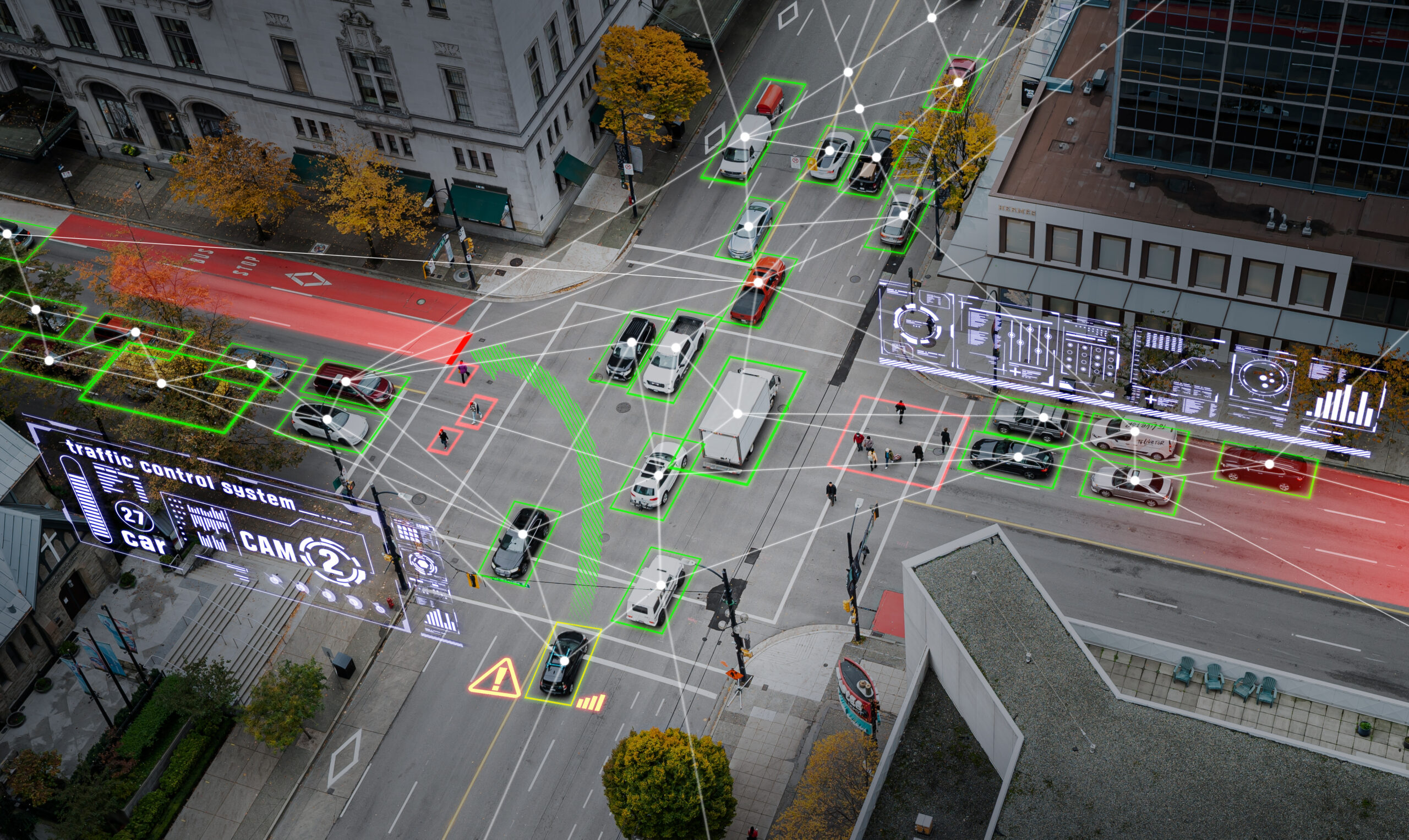
A city’s digital twin basically simulates the city with as much detail as possible, so that future scenarios can be evaluated using that simulation. In games like Cities Skylines II, players can launch meteorites or flood cities, but with the BSC-CNS, urban planners are assessing the feasibility of installing a future underground infrastructure project or the result of street pacification.
And this is not easy. The existing infrastructure not only needs to be cloned, but the behavior of residents also needs to be programmed in a realistic manner that is not in a self-indulging. Otherwise, the conclusions would be pointless.
The 15-minute city analyzed with a digital twin
Is Barcelona a 15-minute city? Remember, a 15-minute city is an urban set-up where locals are able to access all of their basic essentials (including work) at distances that would not take them more than 15 minutes by foot or by bicycle. To answer the question, Barcelona replicated itself.
By drawing an isochrone by destination, the map shows the area from which a Barcelona hospital can be reached within a 15-minute walk. As illustrated visually, a large portion of the population can reach this form of healthcare facility, but a significant portion of the map is not within walking distance of the hospital.

These tools can be used to identify the city’s existing shortages, and also analyze potential future interventions in the urban landscape. With the map above, it is easy to see where additional hospitals are not needed, and where new ones could be located.
The model also uses Open Street Maps, and can therefore be used by any city that is sufficiently mapped out.
Barcelona and its Low Emission Zone, analyzed by the BSC-CNS
In 2021, and in the midst of the protests against Barcelona’s Low Emission Zones, which in turn were following the protests against the city’s “superblocks”, a scientific study was published by the BSC-CNS researchers together with researchers from the inLab-FIB at the Technical University of Catalonia (UPC).
The conclusions were particularly interesting since the authors confirmed that although restricting polluting traffic was very useful according to the simulation, even a combination of LEZ and Superblocks was insufficient to achieve an acceptable air quality level.
However, some of the conclusions from these simulations have subsequently been refuted. For example, the 2021 study discussed the potential rebound effects on the perimeter, which were completely ruled out by actual measurements performed later. After the intervention, traffic was reduced on all streets, including isolated ones. It is clear that these models must be repeated.
| Type of street | Average | Median | Total |
| Intervention | −23.8 % | −24.8 % | −23.3 % |
| Adjacent | −8.3 % | −5.5 % | −7.2 % |
| Buffer | −9.5 % | −10.5 % | −8.7 % |
| Control | −9.1 % | −9.4 % | −9.7 % |
Where to install the new subway lines
One of the first conclusive results of the Barcelona analysis was the analysis of how far residents have to travel from their homes to the new subway stops of the future L8 and L9 lines. With this analysis, based on the city’s existing mobility statistics, the use of the public transport system can be maximized.
How to act in the event of future pandemics or risk events
Another use of Barcelona’s digital twins will be to scour social media in real time in search of different messages about health crises, infections and other threats, such as an area affected by flooding or other events, so that political decisions can be taken almost in real time and in a flexible manner.
Simulating cities, simulating planets, simulating people
The BSC-CNS has not just designed digital twins for the city of Barcelona, it has also designed them for the planet through the Destination Earth program designed to “monitor, simulate and predict the interaction between natural phenomena and human activities”.
And it has also ventured into human ‘digital twins’ within the Virtual Human Twins Initiative program, designed to “mimic and predict behavior of their physical counterparts, including interaction with additional diseases a person may have”.
Both projects form part of EU-funded European Commission projects.
Creating a digital clone of a city is not easy, and programming that clone to respond the way the original city would is even more complicated. But with the help of supercomputing and the Barcelona Supercomputing Center – Centro Nacional de Supercomputación, it is now possible to emulate Barcelona and use the virtual environment as an urban laboratory without having a negative impact on the real city.
Image | Martijn Vonk