



Author | Raquel C. Pico
Digital transformation has been one of the major revolutions in cities at this turn of the century. Cities shifted from the analog urban environment to the intelligent, digital city, to the smart city. It was a remarkable leap with powerful transformative effects. However, it is one that is about to be surpassed as these smart cities enter a new stage. They are now integrating artificial intelligence (AI) and, more specifically, opening the door to the use of agentic AI.
The era of agentic AI
Of course, agentic AI is not something limited to cities; it is one of the major leaps in the development of artificial intelligence.
The public is already familiar with generative AI, the type used by systems that have become popular with everyday users in recent years. These are the ones capable of generating text, images, or explanations in response to requests. They do this by drawing on all the data they have previously consumed. If you ask them to write a story, they will base it on all the stories they have been fed. Agentic AI goes one step further, which makes it particularly appealing to businesses, organizations, and, in this case, smart cities.
Agentic AI vs. generative AI
What sets agentic AI apart from generative AI is its ability to complete tasks on its own. As an IBM analysis explains, “agentic AI is an artificial intelligence system that can achieve a specific goal with limited supervision.” The example they provide helps illustrate what agentic AI is: it can not only determine the optimal time to climb Mount Everest but also book all the necessary elements for the trip.
To accomplish this, agentic AI relies on machine learning models that learn how decisions are made. Thanks to large language models (LLMs), it can go a step beyond what generative AI achieves. AI agents are more autonomous and flexible and are able to solve problems independently. They can even act proactively in different situations.
This makes them especially valuable for urban management, a constantly changing environment where countless decisions must be made every hour, each of which can trigger a domino effect influencing subsequent decisions.
Impact on smart cities

Agentic AI thus opens up multiple opportunities to improve urban systems, while also presenting new challenges for urban governance. After all, it is not just about automating processes but about placing decisions in the hands of technology. It could be seen as a step further into the future compared to what the current technological infrastructures of smart cities are doing.
The potential benefits are significant. AI agents can manage everything faster and more efficiently, bringing greater dynamism and reducing bureaucratic delays. They can also identify new opportunities, supporting potential economic growth or finding more effective processes (for example, improving waste management and thereby reducing the environmental footprint). Productivity scales up, and less time, opportunities, and even money are lost.
Challenges of agentic AI
The potential benefits for smart cities are clear, but agentic AI also brings certain obvious challenges.
The first is one common to all AI-driven digitalization processes: ethics. After all, although we may think artificial intelligence is neutral, it is not. It also has biases and can make mistakes. This is why the transition to agentic AI must go hand in hand with adjustments in urban governance to ensure that all possible safeguards are in place. The second challenge is cybersecurity. Cyber-attacks on cities have increased in recent years, and greater digitalization raises the potential risk.
Finally, another potential issue is embracing agentic AI just because it is currently trending, without giving it proper consideration. Before starting the process, it is important to set objectives, understand whether it truly fits the goals at hand, and, as a McKinsey analysis recommends, determine whether workflows will align with this approach.
In short, smart cities need a clear strategy, robust governance, and AI that is carefully managed and verified by humans to make this leap.
Success stories
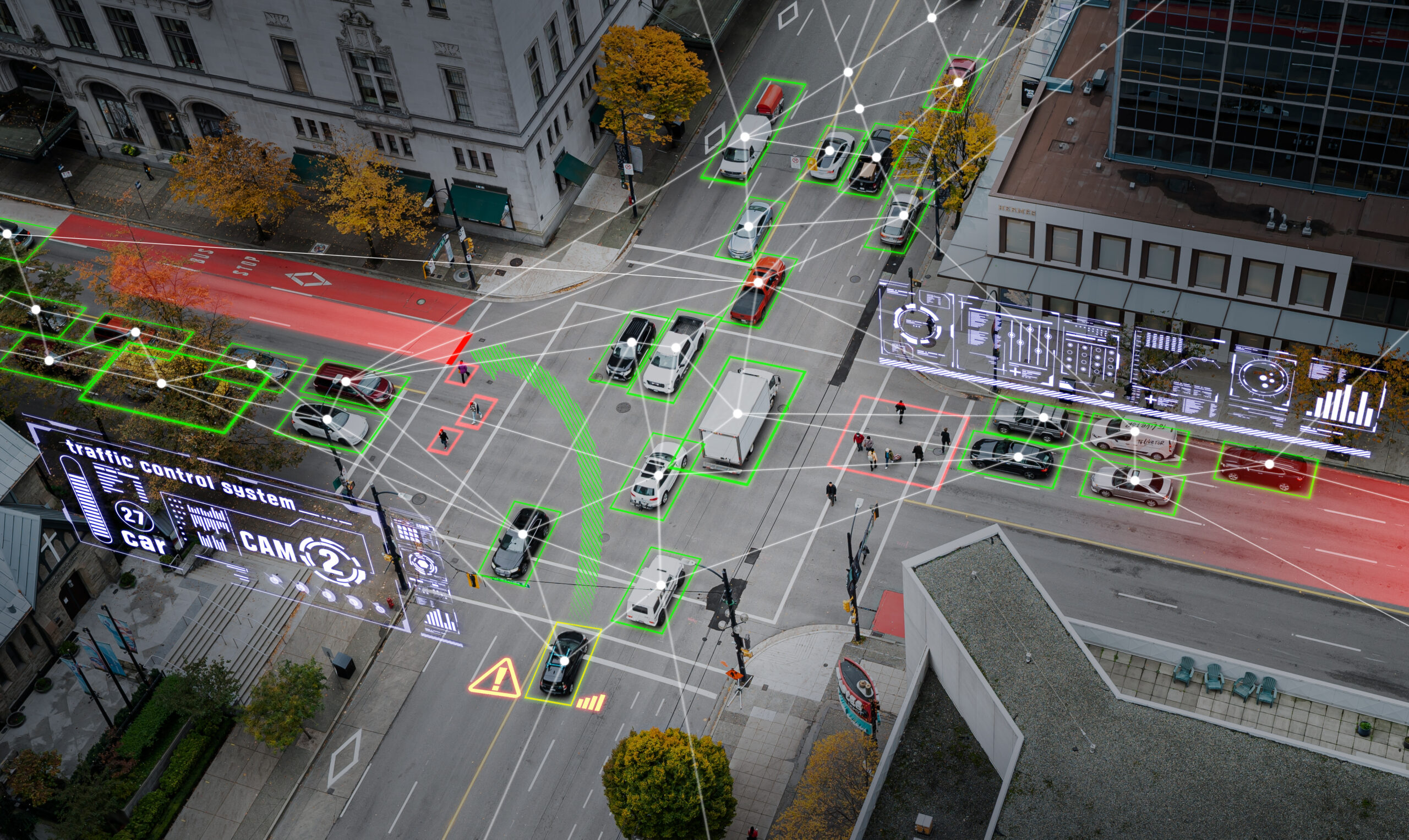
Although the boom in agentic AI is relatively recent, there are already examples demonstrating its potential. Earlier initiatives, such as the Alibaba City Brain in Hangzhou, China, highlighted AI’s capabilities: by using large amounts of data, it can manage road traffic for more efficient circulation. More recent examples, like Lancaster, USA, have integrated agentic AI for urban permit management, streamlining the process. As the mayor of Seattle, USA, puts it, “AI is not a tool; it is an active force.”
Photos | 40455/iStock, piranka/istock