Makerspaces for economic development and social cohesion

The makers’ movement enables manufacturing with skills that can easily be shared in a small community, creating more cohesive societies.
Mastering mobility with the 15-minute city

Coined in 2016 by researcher and professor Carlos Moreno, the ‘15-minute city’ concept gained popularity (and infamy) during the COVID-19 pandemic. As people around the world adapted to the necessity of working from home, awareness about the quality of residents’ immediate neighbourhoods came to the fore and debates about the development of liveable cities were robust.
Electric cars and on-street charging: how to overcome this problem?
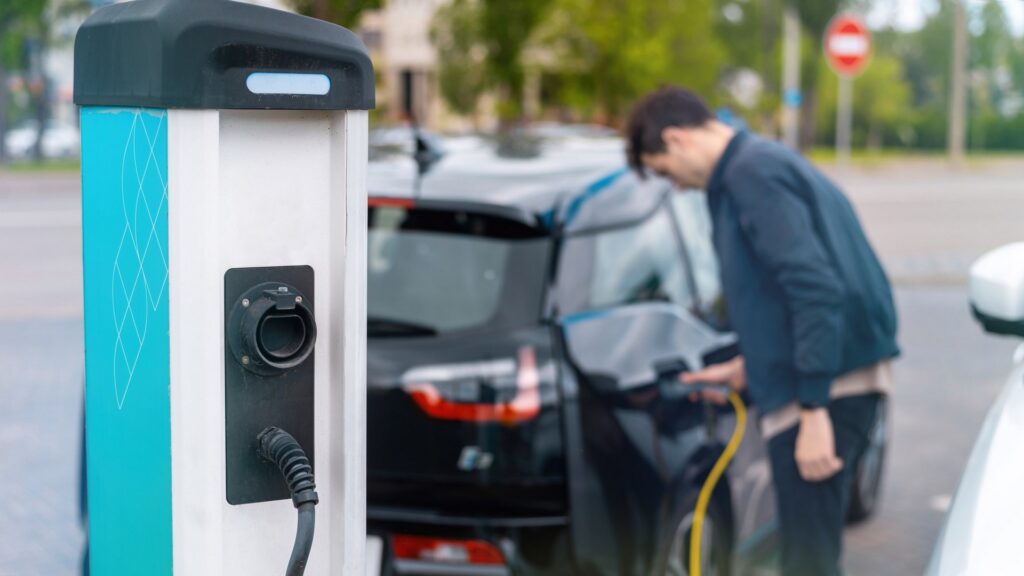
Public charging is considered to be one of the classic obstacles for the development of electric mobility. Are there not enough charging points because there are not enough electric cars or are there not more electric cars on the road because we do not have the appropriate charging infrastructures?
Mastering mobility: autonomous vehicles and EU-alignment

Light electric vehicles (LEVs) are rapidly becoming a key component of modern urban mobility, with significant growth expected in the industry over the coming years. In Europe, LEVs are already outselling electric vehicles (EVs), with the market projected to triple by 2030 and double again by 2040. In 2022 alone, 10 million LEVs were sold in Europe, nearly three times the number of EVs sold that year.
U.S. MAYORAL ROUNDTABLE #9 | Innovative Public-Private Partnerships: Reimagining Housing Transformation

Save the date! 18TH NOV 2024
How cities around the world are tackling poverty

Some cities are tackling extreme poverty by using innovative programs in order to help homeless people to settle their lives.
Mastering mobility: costs and benefits of the sustainable transition

Light electric vehicles (LEVs) are rapidly becoming a key component of modern urban mobility, with significant growth expected in the industry over the coming years. In Europe, LEVs are already outselling electric vehicles (EVs), with the market projected to triple by 2030 and double again by 2040. In 2022 alone, 10 million LEVs were sold in Europe, nearly three times the number of EVs sold that year.
Is it possible to save suburbs from themselves?

Suburban living implies many challenges. How can technologies and policies be helpful to improve its sustainability?
Singles and urbanism: towards cities with fewer couples

Living alone is one of the silent trends affecting today’s urbanism. It may be hard to believe, but the phenomenon has implications that go beyond the demographic sphere. How is it affecting cities and their economies?
Mastering mobility: LEV batteries

Light electric vehicles (LEVs) are rapidly becoming a key component of modern urban mobility, with significant growth expected in the industry over the coming years. In Europe, LEVs are already outselling electric vehicles (EVs), with the market projected to triple by 2030 and double again by 2040. In 2022 alone, 10 million LEVs were sold in Europe, nearly three times the number of EVs sold that year.